
About
Mr. Ranjeet Deshmukh
MR RANJEET DESHMUKH
- CHAIRMAN OF RAJHANS MILK
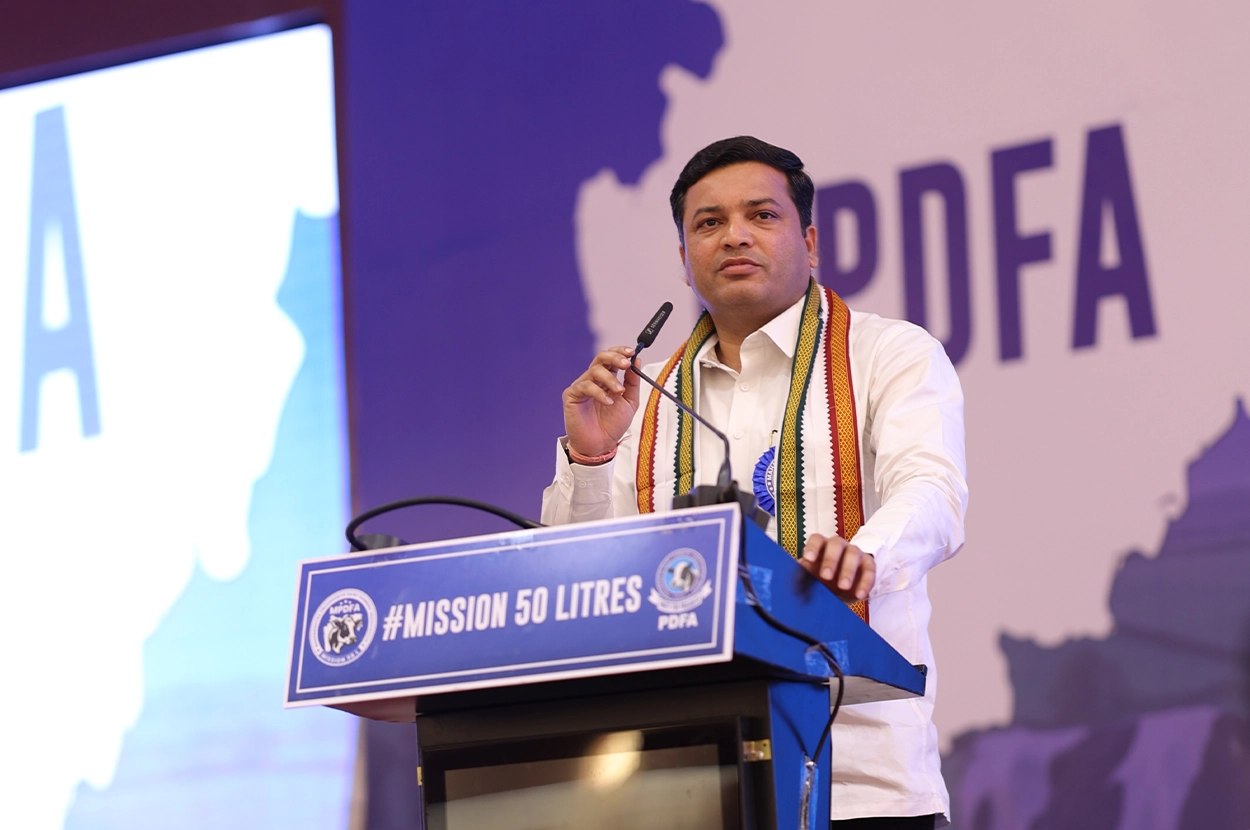
Mr. RANJEET DESHMUKH
-CHAIRMAN OF RAJHANS MILK
Shri Ranjeet Deshmukh, Chairman of Rajhans Milk Union and President of Maharashtra PDFA, has played an important role in giving a modern, scientific and business-oriented direction to dairy farming in Maharashtra. Born into a farming family, he developed a close connection with dairy farming from childhood. He experienced the care of around 50 Khillar cows, fodder planning and the day-to-day difficulties faced by milk-producing farmers. These experiences shaped his belief that dairy farming is not merely an industry, but an important foundation of the rural economy.
In 2008, Shri Ranjit Deshmukh took responsibility as Director of Rajhans Milk Union. Instead of limiting his leadership to office work, he visited villages, interacted directly with milk producers and studied their challenges related to fodder shortages, animal health, rising production costs and lack of modern technology. To understand advanced dairy-management practices, he studied modern systems in countries including the Netherlands, Brazil and Israel. These experiences strengthened his vision of introducing scientific management, modern cattle sheds, efficient fodder planning and advanced dairy practices for farmers in Maharashtra.
In 2015, he became Chairman of Rajhans Milk Union. Under his guidance, initiatives such as Open-Movement Cattle Shed, Silage, Artificial Insemination, Modern Dairy Farming, Cow Comfort, Biogas and Mission 50L were promoted to make dairy farming more productive, sustainable and financially strong. In 2019, he was elected Chairman of Maharashtra State Cooperative Milk Federation Limited, known as Mahanand Dairy.
In 2026, as Chairman of Rajhans Milk Union and President of Maharashtra PDFA, he presented the future roadmap of the dairy sector through Mission 50L. His vision is to connect farmers with science, technology, planning and cooperation so that they can progress from being milk producers to capable dairy entrepreneurs.
Life Journey
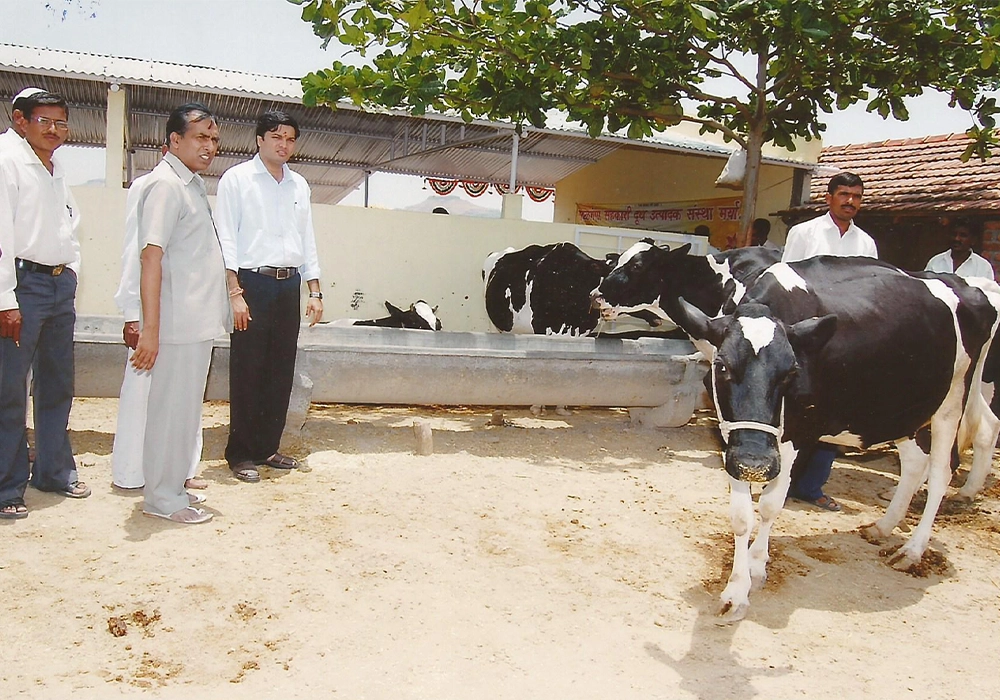
Shri Ranjeet Deshmukh’s journey in the dairy sector began long before he entered formal leadership. Born into a farming family, he grew up closely connected with dairy farming and personally experienced the care of around 50 Khillar cows, fodder planning and the daily challenges faced by milk-producing farmers. These early experiences shaped his understanding of dairy farming as an important pillar of the rural economy.
In 2008, he took responsibility as Director of Rajhans Milk Union. Instead of limiting his role to administrative work, he travelled to villages, interacted directly with farmers and studied their concerns related to fodder shortages, animal health, rising production costs and limited access to modern technology.
To strengthen his understanding of advanced dairy management, he studied modern dairy practices in the Netherlands, Brazil and Israel. In 2009, his Netherlands visit introduced him to the Open-Movement Cattle Shed concept, while his 2013–14 Israel visit deepened his understanding of modern fodder management and silage.
In 2015, Shri Ranjit Deshmukh became Chairman of Rajhans Milk Union. Under his guidance, several initiatives such as Open-Movement Cattle Shed, Silage, Artificial Insemination, Modern Dairy Farming, Cow Comfort, Biogas and Mission 50L were promoted to make dairy farming more scientific, productive and financially sustainable.
In 2019, he was elected Chairman of Maharashtra State Cooperative Milk Federation Limited, known as Mahanand Dairy. During the COVID-19 period, efforts were made under his leadership to keep milk procurement running and reduce losses for milk-producing farmers.
By 2026, as Chairman of Rajhans Milk Union and President of Maharashtra PDFA, he was leading Mission 50L with a clear vision: to combine planning, genetics, technology, scientific management and cooperation so that farmers can grow from milk producers into capable dairy entrepreneurs.
In 2015, he became the Chairman of the Rajhans Milk Union. Inspired by the advanced dairy systems abroad, he resolved to further develop and modernize the dairy sector in Maharashtra. After returning to India, he initiated several progressive initiatives.While working on the ground, he realized that cows in many areas were still being tied with chains. This traditional practice was limiting animal health and milk production. To overcome this, he introduced the concept of “free-stall housing” (Mukt Sanchar Gotha) across Maharashtra. He also successfully implemented projects like Modern Dairy Farms (MDF).
Later, due to low rainfall, there was a shortage of green fodder, which directly affected the dairy business. Earlier, farmers depended mainly on dry fodder, which was not sustainable throughout the year. To address this issue, he adopted a modern and scientific approach by promoting the concept of “silage.”At the PDFA agricultural exhibition in Punjab, more than 700 cows participated. Among them, one cow produced 83 liters of milk, while many others produced over 70 liters. Inspired by this achievement, he raised an important question: “If this is possible in Punjab, why not in Maharashtra?” This thought led to the launch of the ambitious initiative “Mission 50L – Dairy Revolution: Once Again..!” Through this initiative, a significant step has been taken towards building a strong movement in the dairy sector.
Life Journey
Ranjit Deshmukh, coming from a farmer family background, took charge as a Director of the Rajhans Milk Union in 2008. Since then, he has developed a close association with the dairy sector. He had the opportunity to visit various countries, where he studied modern dairy management practices in countries like the Netherlands, Brazil, and Israel—focusing on efficient cattle management with minimal manpower and the effective planning of housing 500 to 1000 cows in a single shed.
In 2015, he became the Chairman of the Rajhans Milk Union. Inspired by the advanced dairy systems abroad, he resolved to further develop and modernize the dairy sector in Maharashtra. After returning to India, he initiated several progressive initiatives.While working on the ground, he realized that cows in many areas were still being tied with chains. This traditional practice was limiting animal health and milk production. To overcome this, he introduced the concept of “free-stall housing” (Mukt Sanchar Gotha) across Maharashtra. He also successfully implemented projects like Modern Dairy Farms (MDF).
Later, due to low rainfall, there was a shortage of green fodder, which directly affected the dairy business. Earlier, farmers depended mainly on dry fodder, which was not sustainable throughout the year. To address this issue, he adopted a modern and scientific approach by promoting the concept of “silage.”At the PDFA agricultural exhibition in Punjab, more than 700 cows participated. Among them, one cow produced 83 liters of milk, while many others produced over 70 liters. Inspired by this achievement, he raised an important question: “If this is possible in Punjab, why not in Maharashtra?” This thought led to the launch of the ambitious initiative “Mission 50L – Dairy Revolution: Once Again..!” Through this initiative, a significant step has been taken towards building a strong movement in the dairy sector.
Vision
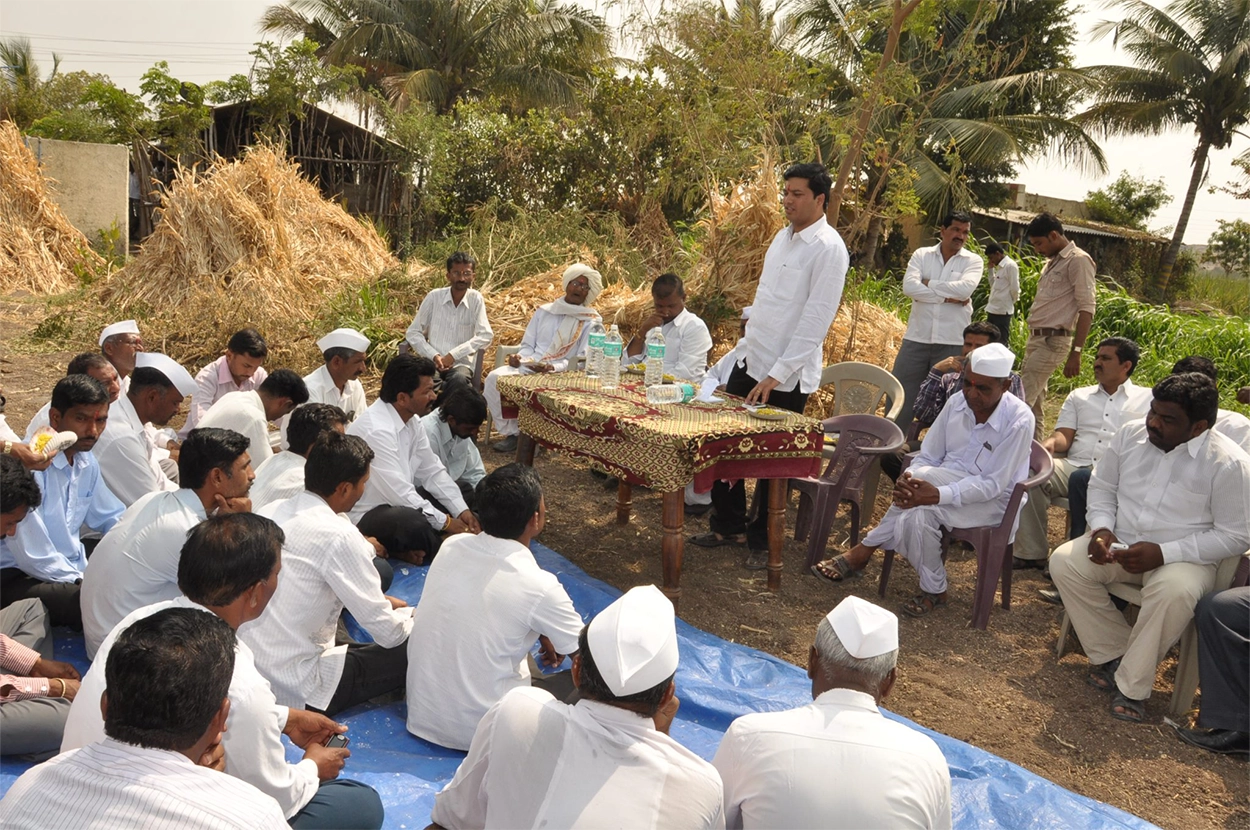
To transform dairy farming in Maharashtra into a progressive, sustainable, and profitable enterprise through modern technology, scientific management, innovation, and cooperation. To empower farmers with knowledge, planning, better practices, and advanced dairy solutions that improve productivity and long-term financial stability. To create a future where every milk producer can grow into a capable, confident, self-reliant, and successful dairy entrepreneur.
- Farmer empowerment
- Sustainable rural development
- Modern dairy and agriculture
- Youth engagement in farming
- Strong cooperative ecosystem
Mission
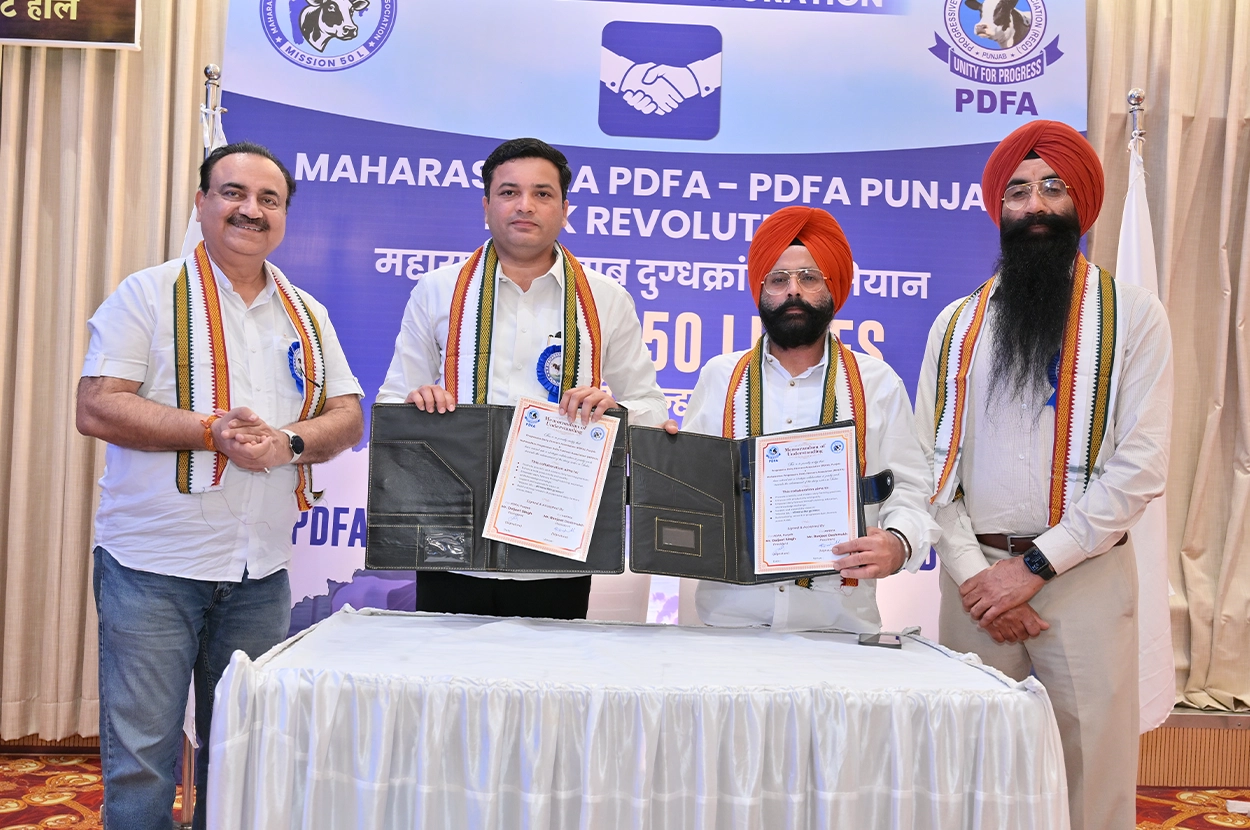
To guide dairy farmers through scientific management, modern technology, improved genetics, fodder planning, animal health, cow comfort, and systematic record keeping. To improve milk productivity, reduce unnecessary production costs, strengthen animal management, and support farmers in building efficient and sustainable dairy businesses. To connect farmers with knowledge, innovation, planning, and cooperation, enabling their journey from traditional milk producers to capable, confident, self-reliant dairy entrepreneurs.
- Improve milk productivity
- Provide farmer support programs
- Strengthen dairy infrastructure
- Encourage sustainable practices